


July 17, 2026
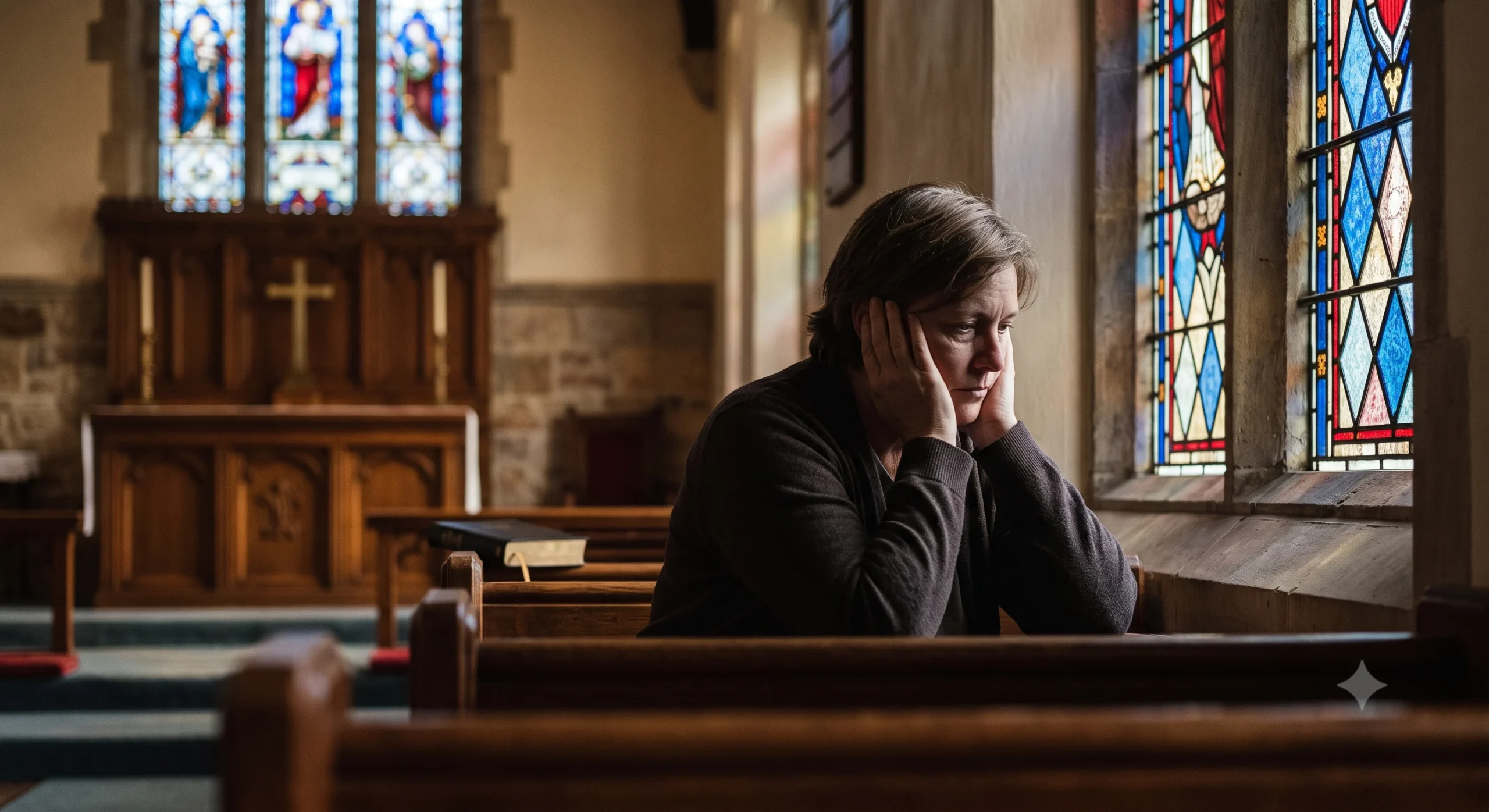
A conversation you wish had gone differently.
A decision you haven’t made.
A mistake you can’t undo.
A responsibility that seems to follow you everywhere.
You replay it while driving.
You revisit it in the shower.
You wake up at three o’clock in the morning, and somehow it’s already waiting for you.
Most of us immediately diagnose the problem the same way.
“I’m overthinking.”
Maybe.
But after years of walking alongside pastors, executives, business owners, and ministry leaders, I’ve begun wondering if that’s really what’s happening.
I think we’ve been diagnosing the wrong problem.
One of the things I’ve learned through coaching is that our minds have an incredible ability to return to unfinished business.
Not because they’re broken.
Because they’re trying to resolve something.
Think about the last issue you couldn’t stop thinking about.
Was it random?
Probably not.
It was likely connected to something unfinished.
A conversation that never happened.
A decision you keep postponing.
A disappointment you’ve never fully processed.
A responsibility you’ve accepted that was never yours to carry.
In other words, what we often call overthinking may actually be unresolved weight.
That realization changed the way I coach leaders.
Instead of asking,
“How do I stop thinking about this?”
I now ask a different question.
What is my mind trying to resolve?
That question almost always leads somewhere deeper.
One of the most revealing leadership passages in Scripture isn’t about leadership at all.
It’s about silence.
David writes in Psalm 32,
“When I kept silent, my bones wasted away through my groaning all day long.”
Notice where David begins.
Not with his thoughts.
With his silence.
Something remained unresolved.
Something remained hidden.
Something remained unspoken.
And that unresolved reality affected every part of him.
His emotions.
His body.
His relationship with God.
His ability to experience joy.
Eventually David stops hiding.
He confesses.
He releases.
He entrusts himself to God.
And with confession comes relief.
I’ve often wondered how many leaders today are carrying something similar.
Not because they’re weak.
Not because they lack discipline.
But because they’ve been carrying something their soul was never designed to carry indefinitely.
As I’ve reflected on hundreds of coaching conversations, I’ve noticed that unresolved weight usually comes from one of five places.
Some decisions don’t become easier because we delay them.
They simply become heavier.
Your mind keeps revisiting the issue because it longs for resolution.
Last week we talked about avoided conversations.
Here’s the connection.
When a conversation never happens externally, it often continues internally.
You replay both sides.
Rewrite the dialogue.
Imagine every possible outcome.
The conversation never disappeared.
It simply relocated.
This is one of the biggest challenges I see in leaders.
We begin carrying outcomes that were never ours to control.
A pastor tries to carry every person’s spiritual growth.
A CEO carries the emotional health of the entire company.
A parent carries the decisions of an adult child.
Leadership requires responsibility.
It does not require omnipotence.
Leaders are often expected to move quickly.
The next meeting.
The next crisis.
The next initiative.
The next sermon.
The next quarter.
The next season.
But losses ignored don’t disappear.
They simply wait.
Eventually they ask to be acknowledged.
Sometimes the thing keeping your mind occupied isn’t anxiety.
It’s grief.
This one is deeply personal for many of us.
We desperately want someone else to change.
To understand.
To choose differently.
To heal.
To believe.
To respond.
Yet some outcomes simply do not belong to us.
Peace often begins the moment we release our grip on responsibilities God never assigned us.
If your mind has felt unusually crowded lately, take a few quiet moments and ask yourself these questions.
What decision remains unfinished?
What conversation remains unresolved?
What loss have I never really grieved?
What outcome am I trying to control?
What responsibility am I carrying that actually belongs to someone else—or ultimately, to God?
Don’t rush those questions.
Sit with them.
Pray through them.
Write about them.
Invite someone you trust to help you process what surfaces.
You may discover that what you’ve been calling overthinking is actually your soul asking for resolution.
One of my favorite invitations in Scripture comes from Jesus.
“Come to me, all who are weary and burdened, and I will give you rest.”
—Matthew 11:28
Notice what He promises.
Not immediate answers.
Not a perfectly predictable future.
Not the removal of every responsibility.
He promises rest.
That’s an important distinction.
Christian leadership isn’t about carrying less responsibility.
It’s about refusing to carry responsibility that belongs to Christ alone.
I’ve spent years trying to remember that.
Sometimes successfully.
Sometimes not.
But every time I return to Jesus’ invitation, I find myself asking a better question.
Not…
“How do I stop thinking about this?”
But…
“What am I still carrying that Jesus is inviting me to release?”
That question changes everything.
If you’ve found yourself replaying the same situation over and over…
Don’t begin by fighting your thoughts.
Begin by listening to them.
Your mind may be pointing you toward something unfinished.
A conversation.
A decision.
A confession.
A grief.
A surrender.
Because here’s what I’ve come to believe after years of leadership and coaching.
Your mind keeps returning to what your heart has not resolved.
And sometimes the next faithful step isn’t discovering something new.
It’s finally resolving what you’ve been carrying all along.
This week, don’t try to quiet your mind.
Instead, quiet the source of the noise.
Take one sheet of paper and write these five headings:
Under each one, write whatever immediately comes to mind.
Then ask one final question:
“Lord, what is my next faithful step?”
You don’t need to resolve everything today.
You simply need to take the next faithful step toward what God is inviting you to address.
Because clarity isn’t knowing everything.
Clarity is knowing the next faithful step.
Whether it’s a reflection, a question, or just a word of encouragement, I read and listen to every message. Thanks for being part of this clarity journey.
Don’t miss the full series: The Best Vision Clarity Process for Churches
From listening and naming the horizon to strategic milestones and 90-day sprints, this roadmap helps teams put Christ-shaped vision into motion—together.